



-
Technical/Service
-
Brands
-
Information
-
References
Office Furniture for Modern Work Environments
The demands on today’s workplaces are constantly evolving: hybrid working models, project-based collaboration and digital tools increasingly shape everyday office life. Traditional conference rooms are also changing – from purely meeting spaces into multifunctional areas for dialogue, collaboration and focused work. Choosing the right office furniture plays a key role here. It needs to be functional, flexible and visually appealing. “A well-designed conference room acts like a business card for the company – both internally and externally,” explains Jürgen Effner, Managing Director of TOPREGAL GmbH. “By using carefully considered furnishings, organisations demonstrate structure, appreciation and innovative strength.”
Balancing Function and Design
The conference table is one of the central elements of any meeting room. Alongside appropriate size – based on the room dimensions and typical number of participants – a durable, easy-care surface and practical features are essential. A table that is too small restricts workflows, while one that is too large can overwhelm the room visually. Realistic space planning is key: for small to medium-sized companies, tables with eight to ten seats are often sufficient, whereas larger rooms can be furnished more generously. Models such as the ANJA280i conference table from TOPREGAL offer a thoughtful solution: with a continuous frame design, robust tabletop and eight integrated sockets, it supports a wide range of scenarios – from interviews to strategic team meetings. Wireless charging (Qi) built directly into the surface and easy-to-clean finishes are now standard in many companies.
Ergonomic Seating as a Basis for Concentration
Conference chairs are often used for long periods during meetings – which makes comfort and ergonomics essential. Key criteria include back-friendly design, breathable materials and pleasant padding. Details such as armrests make a noticeable difference in longer sessions, supporting posture and reducing strain. Stackable or lightweight models add flexibility, especially where room layouts change frequently or quick rearrangements are needed – for example, workshops or larger team gatherings. Timeless designs and darker fabrics create a calm atmosphere and are easy to combine with different interior styles. Cantilever chairs are also popular, as their gentle movement allows freedom without disrupting focus.
Digital Support for Interactive Meetings
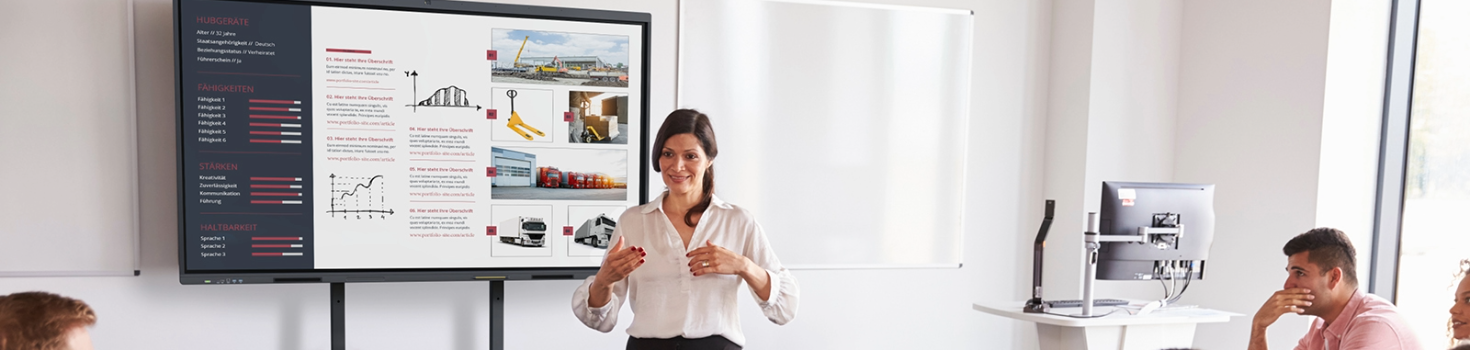
Technology has become a natural part of conference room planning. Interactive displays are increasingly replacing traditional whiteboards or projectors, opening up new possibilities for creative teamwork. Modern systems combine touch functionality, video conferencing and presentation tools in one device – ideal for hybrid meetings and collaborative work. For example, TOPREGAL’s IWBT-86 features a large 4K screen, integrated camera, speakers and wireless connectivity. It can be used for presenting ideas, co-editing content, or holding video calls with teams across locations. Operation is flexible – either via connected laptops or independently using the built-in Android system – making spontaneous meetings possible without extra equipment.
Structuring Spaces – Flexible and Functional
Not every company has a fixed conference room. In many offices, open-plan areas are used for multiple purposes. Partition systems make it possible to create temporary work zones, quiet spaces or visual and acoustic separation. Their strength lies in flexibility and ease of use. Movable panels that can be arranged at angles or in cross-shapes are especially practical, allowing small zones to be defined within open spaces – for example, think tanks or project workspaces. “Fabric-covered partitions also improve acoustics and can serve as pinboards for notes or sketches. They allow offices to adapt flexibly without expensive or long-term structural changes,” Effner notes.
Conference Rooms as Part of Company Culture
Today’s conference rooms are more than just meeting places. They reflect organisation, collaboration and corporate culture. Careful planning creates spaces that encourage ideas, dialogue and commitment. Alongside furniture and technology, structure and atmosphere also matter. “It’s no longer just about using furniture functionally,” says Effner. “What’s needed are holistic solutions that support workflows and put people at the centre.”