



-
Technical/Service
-
Brands
-
Information
-
References
Cost-effective and on schedule: what matters in freight forwarding
Logistics is the backbone of industry: the dispatch and receipt of goods, components or spare parts plays a decisive role in a company’s success. Particularly in the case of large or heavy consignments, many businesses rely on freight forwarders. However, if processes are not planned optimally, potential profits can diminish considerably. How can this process be organised as cost-effectively and time-efficiently as possible, ensuring that the required materials are always available on site in good time? “Choosing the right shipping method plays a crucial role in terms of time management and cost efficiency,” emphasises Jürgen Effner, Managing Director of TOPREGAL GmbH, adding: “By optimising the supply chain strategically, companies can reduce expenses and material shortages to a minimum and consequently increase productivity and revenue.”
Shipping solutions at a glance: how goods reach their destination efficiently
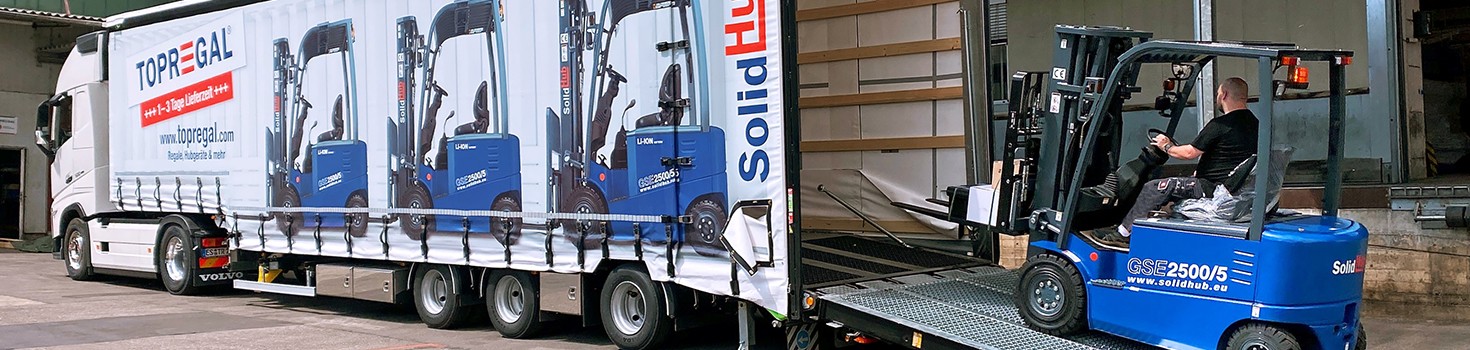
Depending on the type and size of the goods, different transport options are selected. One of the most common methods is pallet shipping. Stacking goods on wooden or plastic pallets is particularly secure, as proper arrangement and securing of the load, for example by wrapping it in stretch film, largely prevents shifting. Pallets can also be moved easily using a pallet truck, which simplifies both loading and unloading. Another option is bulky goods shipping, which is particularly suitable for transporting unwieldy, large or heavy items. “In our case, the majority of products are delivered by our in-house freight service due to their excessive length and substantial weight,” Effner explains, adding: “With our own fleet of vehicles and permanently employed drivers, we remain independent of external service providers and are able to offer customers flexible and punctual deliveries. This is made possible in particular because we are often able to fulfil orders for multiple recipients within a single delivery.” The advantage lies in faster delivery times and a reduced risk of transport damage when the lorry’s loading capacity is fully utilised. Unlike groupage freight, goods do not need to be reloaded.
Avoiding additional costs in freight forwarding
Careful preparation is essential to prevent unnecessary additional costs in freight forwarding. This includes providing accurate information on dimensions, weight and the nature of the goods, as discrepancies frequently result in supplementary charges. It should also be clarified in advance whether suitable unloading facilities are available at the delivery address. “If the company does not have a loading bay, pallet truck or lifting platform, a solution can usually be found in coordination with the freight forwarder,” Effner stresses, continuing: “In such cases, for example, we use lorries equipped with a truck-mounted forklift, tail lift or low-loader, which can be arranged in advance.” Incomplete information may lead to delays, waiting times or failed delivery attempts, all of which incur additional costs. Clear scheduling with the recipient also helps to ensure a smooth process and avoid unplanned extra effort.