


Kanban Racks
Kanban Racks Top seller
SR1500 kanban rack
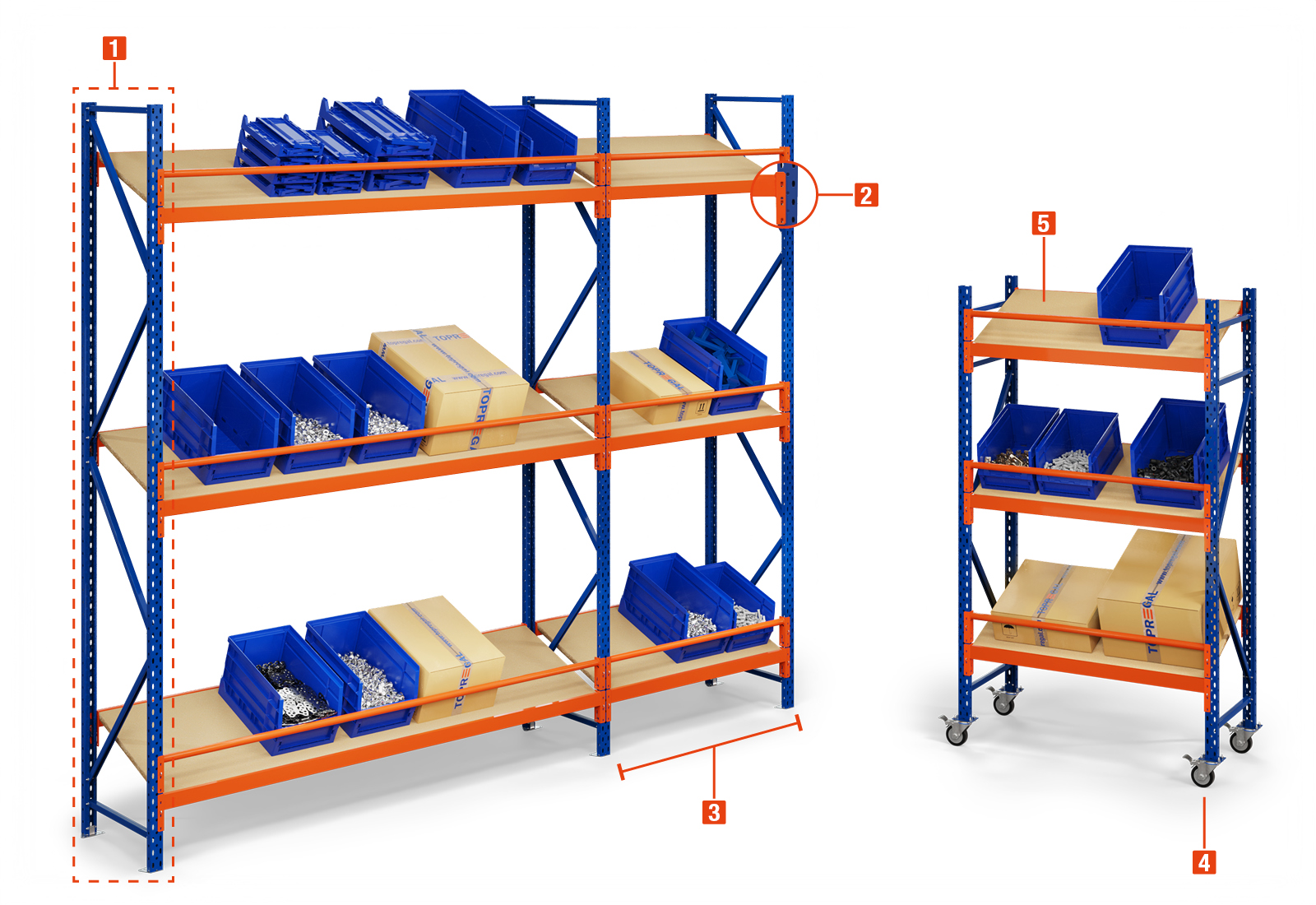
Components
- Uprights
- Beams
- Centre-to-centre distance (bay length)
- Mobile or stationary
- Wooden decking
At a glance
- Rack height 2 m – 4 m
- Wooden decking for optimum storage of dry goods such as open-fronted storage bins, cartons and small parts
- The beams are the load-bearing elements of a kanban rack. Their height is individually adjustable in 5 cm increments. Available in lengths of 110 cm and 220 cm
- Inclined decking with round front beams to prevent goods from falling
- Also available as a mobile kanban rack
- Expandable thanks to modular construction
Kanban rack: mobile or stationary?
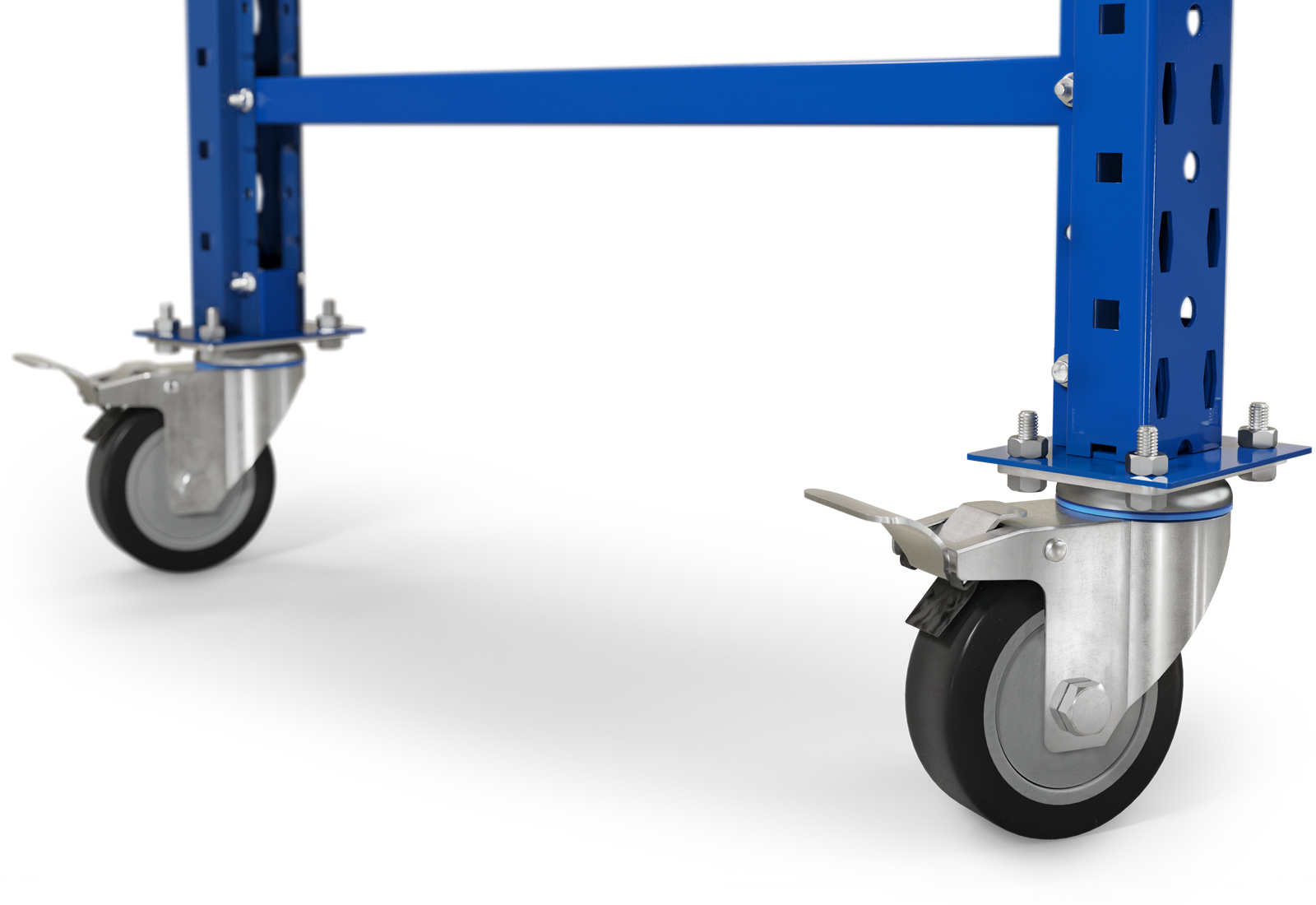
A height-adjustable base with a castor allows the mobile kanban rack to be adjusted by up to 40 cm. Depending on the type and selected basic size, this provides individually adjustable heights from 85 cm to 254 cm.
 |  |
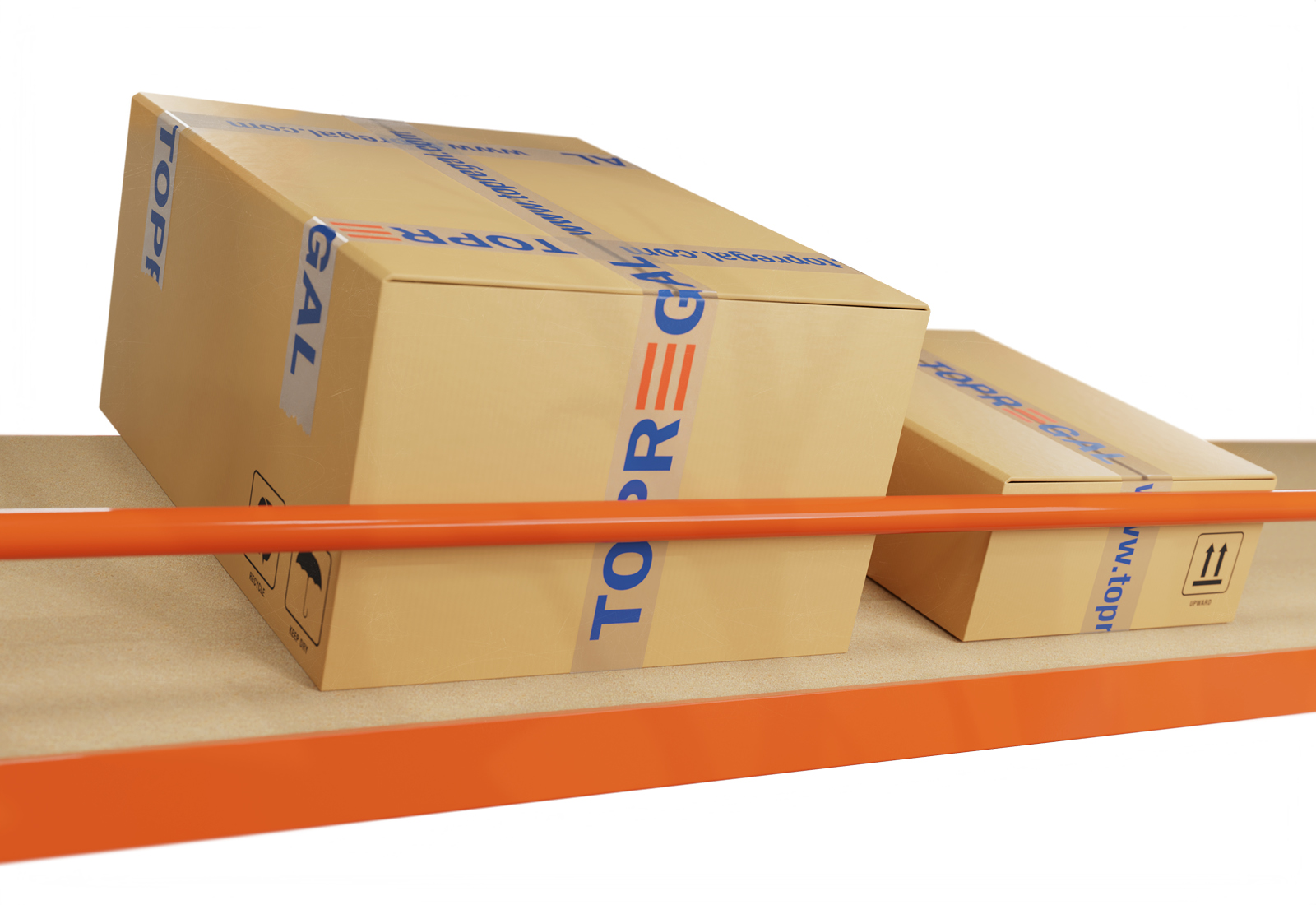
Protection against falling goods
Kanban racks are supplied as standard with round front beams that prevent goods from falling. The inclined decking is installed at an angle of 20 degrees.
 |  |
Bay, shelf and point loads
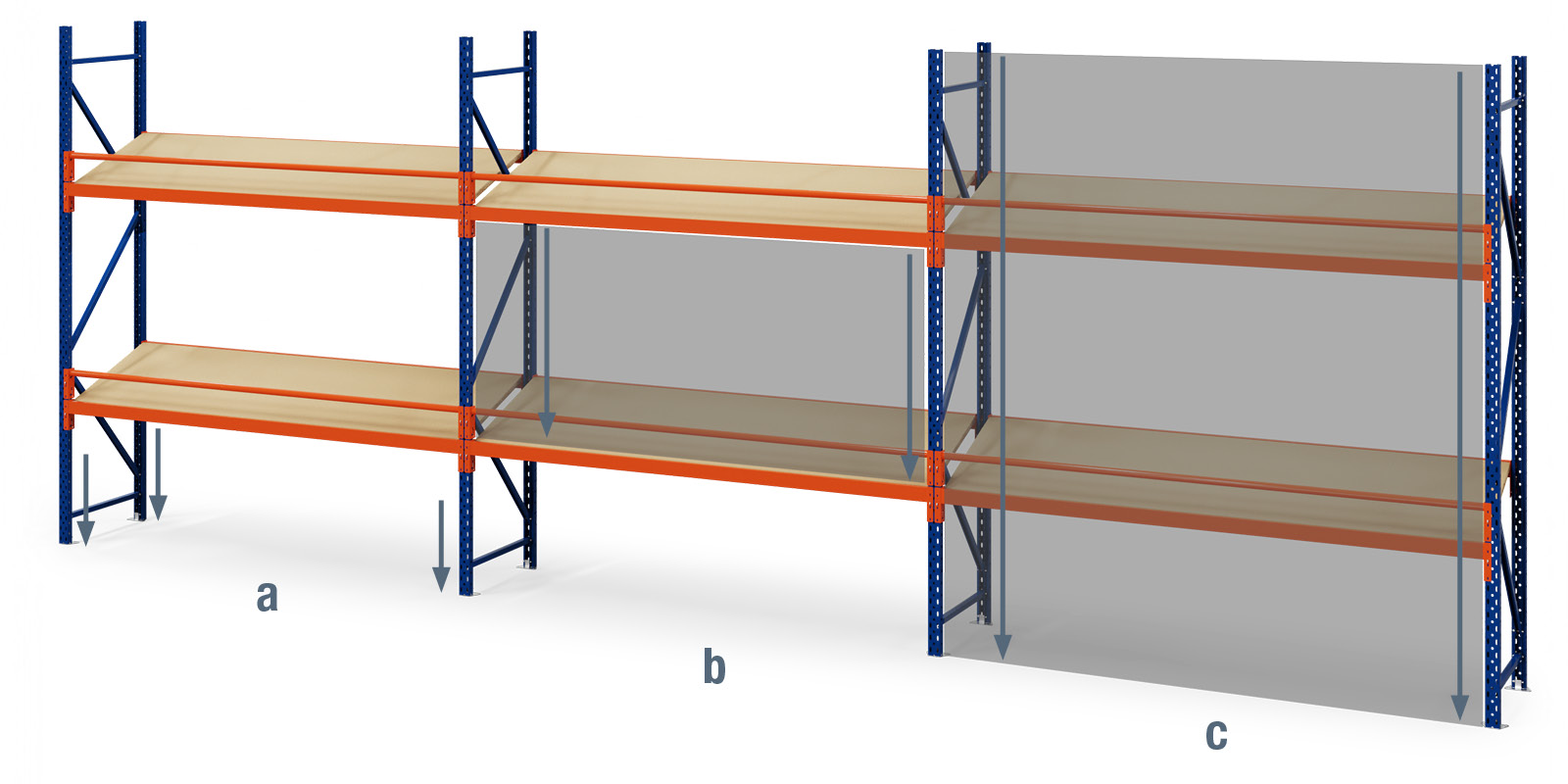
a) Point load
With the load distributed evenly, the maximum point load is 1000 kg. This is the load transferred from the rack upright to the floor.
b) Shelf load
The total load capacity per beam level or item of decking. The maximum shelf load is 300 kg per level.
c) Bay load
The total load capacity between two uprights. The maximum stationary bay load is 1500 kg, while the maximum mobile bay load is 500 kg.
Technical information
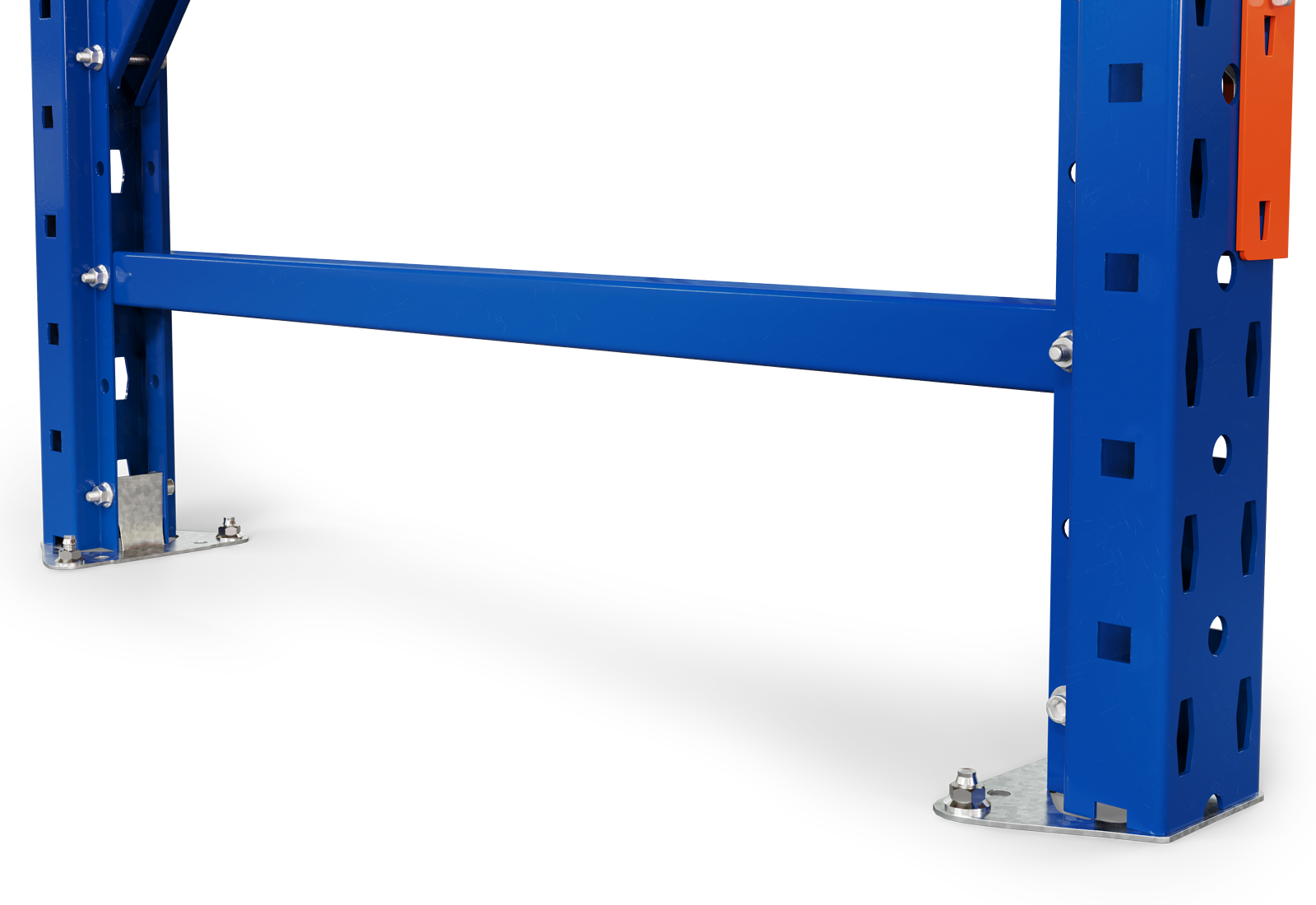
Floor anchoring with a base plate
- Drill holes with a diameter of 8 mm and a depth of 80 mm
- Blow out the holes
- Drive the bolt anchor into the drilled hole
- Tighten the nut securely using an open-ended spanner or similar tool


Centre-to-centre distances
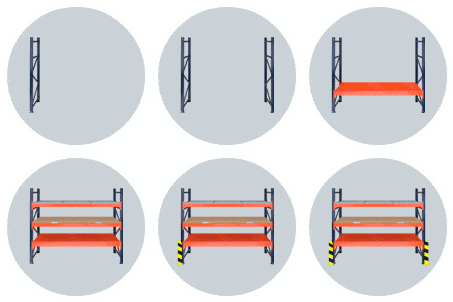
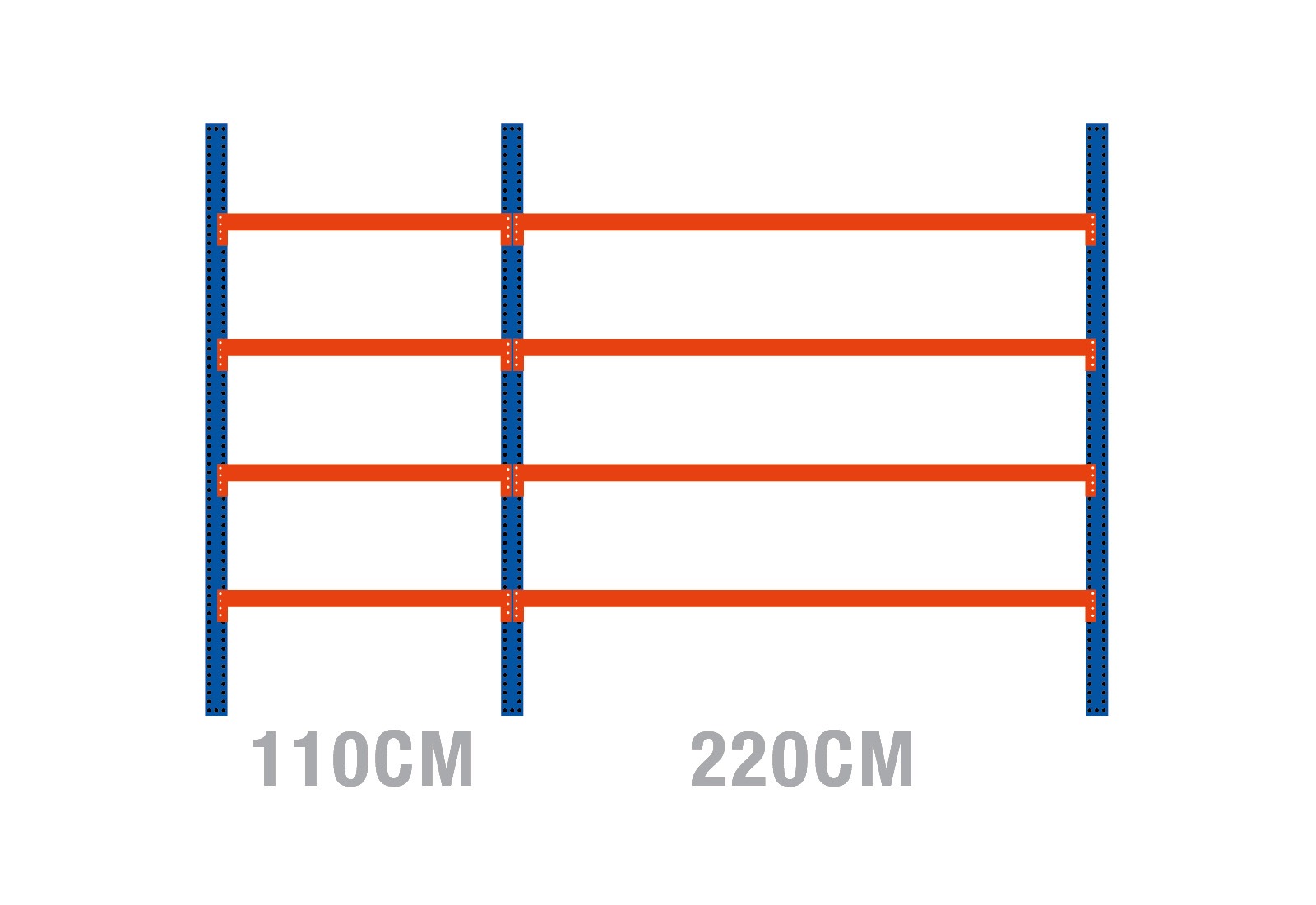
The centre-to-centre distance describes the width of a rack bay and the distance between two uprights. We offer widths of 110 cm and 220 cm, which can be combined freely. Configure the kanban rack with the required bay lengths. Its modular construction also allows the storage rack to be extended at any time after installation.
Securing the beams
Position the preassembled uprights, hook the beams into the upright profiles at the required height on both sides, and insert the locking pins into the designated hole in each beam. The beams are positioned in a 50 mm grid.
 |  |
Application example

Optimised small-parts storage in a kanban rack
Kanban racks are frequently used to store and distribute small parts. Their inclined levels are based on a storage-rack structure and provide clear advantages: warehouse staff can see stock levels immediately, loose items slide directly towards the front, and the available storage space is used efficiently.
The kanban-rack principle originates from the Japanese Kanban process-optimisation method, in which removed goods are replenished directly according to the pull principle. Items can be refilled from the rear and slide forwards automatically along the 20° inclined level. At the front, a secure round-tube retainer holds the goods in place so that they are always ready for removal from the same position. This also allows the items stored longest to be removed first without laborious re-sorting.
Very small components such as screws can be stored securely in open-fronted storage bins or clearly visible cartons. Compatible kanban-rack accessories and storage bins are available from TOPREGAL in different sizes to suit the goods, or in economical sets containing several folding open-fronted storage bins. A practical solution is also available for labelling goods, particularly on higher levels that are difficult to see directly: rewritable magnetic strips.
Whether the kanban rack is positioned as a single-sided unit against a wall or installed as a double-sided version in the centre of the warehouse, its simple modular design allows it to be extended at any time. For maximum flexibility, choose a mobile kanban rack or retrofit an existing unit later using a castor set. Contact us for advice on the appropriate conversion.