



-
Technical/Service
-
Brands
-
Information
-
References
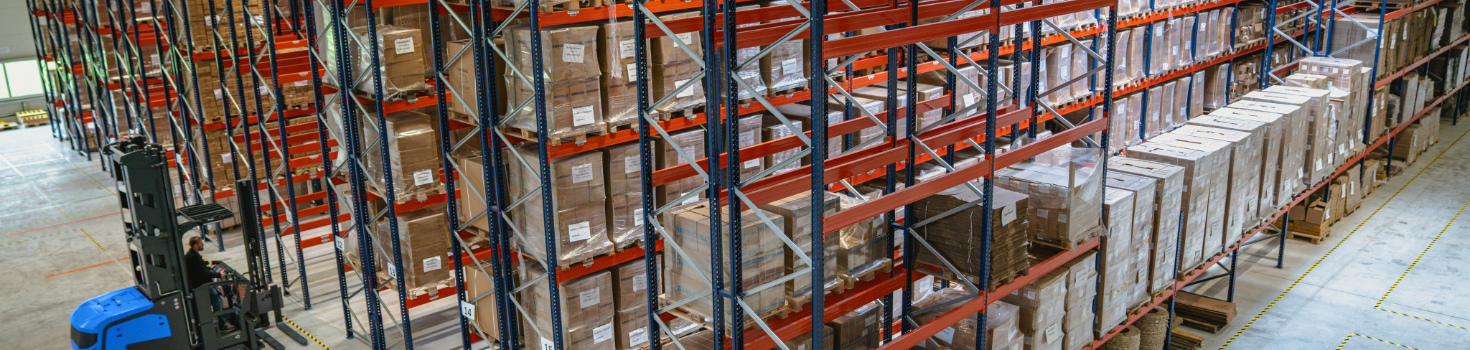
Strategic storage - efficient operations
Modern warehousing must be as individual as the company itself - efficient, scalable and economical at the same time. Whether manufacturing industry, wholesale or e-commerce: the right solution depends on the type of warehouse, the goods structure and the turnover frequency. But which type of warehouse is suitable for which business - and which racking system best supports these processes? Jürgen Effner, Managing Director of TOPREGAL GmbH, provides an overview of the most important storage types.
Buffer and production storage: flexibility and structure for smooth production processes
Buffer storage systems play a central role in manufacturing companies where material availability and production continuity are crucial. They serve as intermediate stations - between incoming goods and the production line, for example - and compensate for fluctuations in the material flow. They are particularly essential in industries with a high number of variants, such as the automotive industry or metal processing. "Buffer storage systems are a safeguard against downtime," emphasizes Effner, "they ensure that production processes do not come to a standstill even in the event of delivery delays or short-term peaks in demand." The racking systems used must be flexible and quickly accessible, which is why long span racks, heavy duty shelving or classic pallet racking is used depending on the application. Production warehouses, on the other hand, are used to directly supply production with materials, tools or semi-finished products and are often located in the immediate vicinity of machines or assembly lines. A clear overview, order and short access routes are essential here - especially with high production volumes or complex processes. "Efficiency is achieved through clear structures and the right storage technology that offers both stability and flexibility," explains Effner. Special solutions such as the KR3000 cantilever racking from TOPREGAL are ideal for long goods such as profiles, pipes or wooden slats - robust, space-saving and with a load capacity of up to 2,000 kilograms per arm, they are also suitable for industrial environments with high material turnover. If long goods are stored upright, the VR1500 vertical shelving system offers the perfect solution.
Distribution and transshipment warehouses: efficient hubs in the flow of goods
Distribution warehouses form the heart of many logistics chains by receiving, sorting, consolidating and preparing goods for further distribution. High throughput is crucial, especially in wholesale or for service providers with many destinations. The focus here is on accessibility, sorting logic and ergonomic processes, not storage density. "Many companies underestimate the importance of clear storage zones in distribution centers - for incoming goods, picking and shipping, for example," says Effner. "A clever choice of shelving supports this separation and prevents unnecessary routes or errors." Storage platforms can also be useful to make optimum use of the available space. Transhipment warehouses, on the other hand, are not used for traditional storage, but for rapid onward transportation. The goods usually only stay for a few hours or days - the focus is on speed and clarity. Open shelving systems with wide aisles for forklift trucks and flexible stacking racks are ideal here. "Transshipment warehouses must function like a well-organized revolving door - quick in, quick out," Effner sums it up. What counts here is not storage density, but maximum mobility for a smooth flow of goods.
Supply and picking warehouses: clear storage of stocks
Supply warehouses enable the long-term, economical storage of strategic stocks - for example as a risk buffer or in the event of seasonal fluctuations. They rely on high storage capacity with low access, which has an impact on the choice of racking systems. "Inventory warehouses must be particularly space-optimized, resilient and stable in the long term," explains Effner. Suitable shelving systems such as the PR9000 pallet racking offer plenty of storage space for heavy or bulky goods with a height of 7.5 meters, ten storage levels and a shelf load of up to 3,000 kilograms. In contrast, order picking warehouses handle a large variety of items in small quantities. They require quick retrieval, structured storage locations and ergonomic picking. "In order picking, errors are expensive and speed is crucial for customer satisfaction," emphasizes Effner. Shelving racks and storage bin racks with clear labeling and pick bins selected to suit the intended use support the efficient handling of variety.
The right storage strategy is a competitive advantage
Choosing the right type of storage - and therefore the right shelving systems - is crucial to the efficiency, flexibility and scalability of operational processes. TOPREGAL sees itself not only as a product supplier, but also as a practice-oriented partner. "Together with our customers, we develop solutions that are a perfect fit for everyday operations - from standard shelving to individually configured models," says Effner. "Because a well-designed warehouse structure is a real competitive advantage today more than ever."